ServicesRoof inspection
Roof Inspection in Florence for Houses With a Past
Older roofs carry history: a patch from one owner, a cooler from another, maybe a second layer nobody mentioned. We walk the roof, look in the attic and show you in photos what is sound, what is wearing out and what can wait.
What You Learn From a Careful Inspection
A roof inspection means looking closely at every part of the roof, from the top surface down to the decking wherever it's visible. It makes sense before buying or selling a home, after a hard monsoon season, when a ceiling stain appears, or when you've lived in an older house for years without anyone going up.
Around Florence and nearby towns, older houses often have roofs that changed one piece at a time. Maybe a flat roof over an addition, concrete tile on the main house and a swamp cooler that got moved twice. Each change creates seams, and seams are where sun and water get in. We sort through those layers so you know what's really there.
The findings come first. If something needs fixing, we tell you whether a repair will last or the roof is close to done, and which items can safely wait a year.
What We Check on Your Roof
Surface material
Shingles get checked for granule loss, curling and cracking from years of desert UV. On tile we look for broken, slipped or loose pieces. On flat roofs we check foam coatings, rolled roofing and any blistering or bare spots.
Underlayment under tile
Concrete tile can outlast the felt beneath it by many years. We lift a few tiles in key spots to see whether the underlayment is brittle, torn or already letting water through.
Old repairs and patches
Roofing cement smeared over a seam, mismatched shingles, a sheet of metal tucked under a valley. We note each past repair, judge whether it is still doing its job and photograph it so you can see it too.
Flashing, vents and cooler curbs
Rusted pipe boots, lifted chimney flashing and leaky evaporative cooler stands cause many of the leaks we find on houses built decades ago. We check every roof penetration and the parapet walls and scuppers on flat sections.
Attic and decking
From inside, we look for water stains, daylight through the boards, soft or darkened decking and signs of poor ventilation. The attic often shows a problem before the ceiling does.
Gutters and drainage
Where there are gutters, we check that they are attached, sloped and clear, and that downspouts send water away from the foundation. Monsoon rain comes fast, so drainage matters more than people expect.
Signs It Is Time for an Inspection
A stain that comes and goes
A ceiling spot that darkens after a summer storm and fades by fall is still a leak. It usually points to flashing, a cooler curb or a cracked tile.
You just bought an older house
Sale inspections are often quick. If nobody climbed up and looked under the tile, a second look from a roofer is worth it.
Patches you cannot account for
Shiny tar spots, odd shingles or a newer section of roof mean someone fixed something. It helps to know what and whether it held.
Grit in the gutters or bare spots
Granules collecting at downspouts tell you shingles are wearing thin. On foam roofs, exposed foam turning brown or crumbly needs attention before it soaks up water.
After a heavy monsoon or dust storm
High wind can lift tiles and shingles without leaving anything in the yard. A look after a big storm catches it early, and if you see clear damage, our storm damage repair page explains the next steps.
What Happens During the Visit
- 1
We talk first
We begin by asking what you've seen and what you know about the house. Old receipts, a seller's disclosure or a remembered leak all point us to the right places.
- 2
Up on the roof
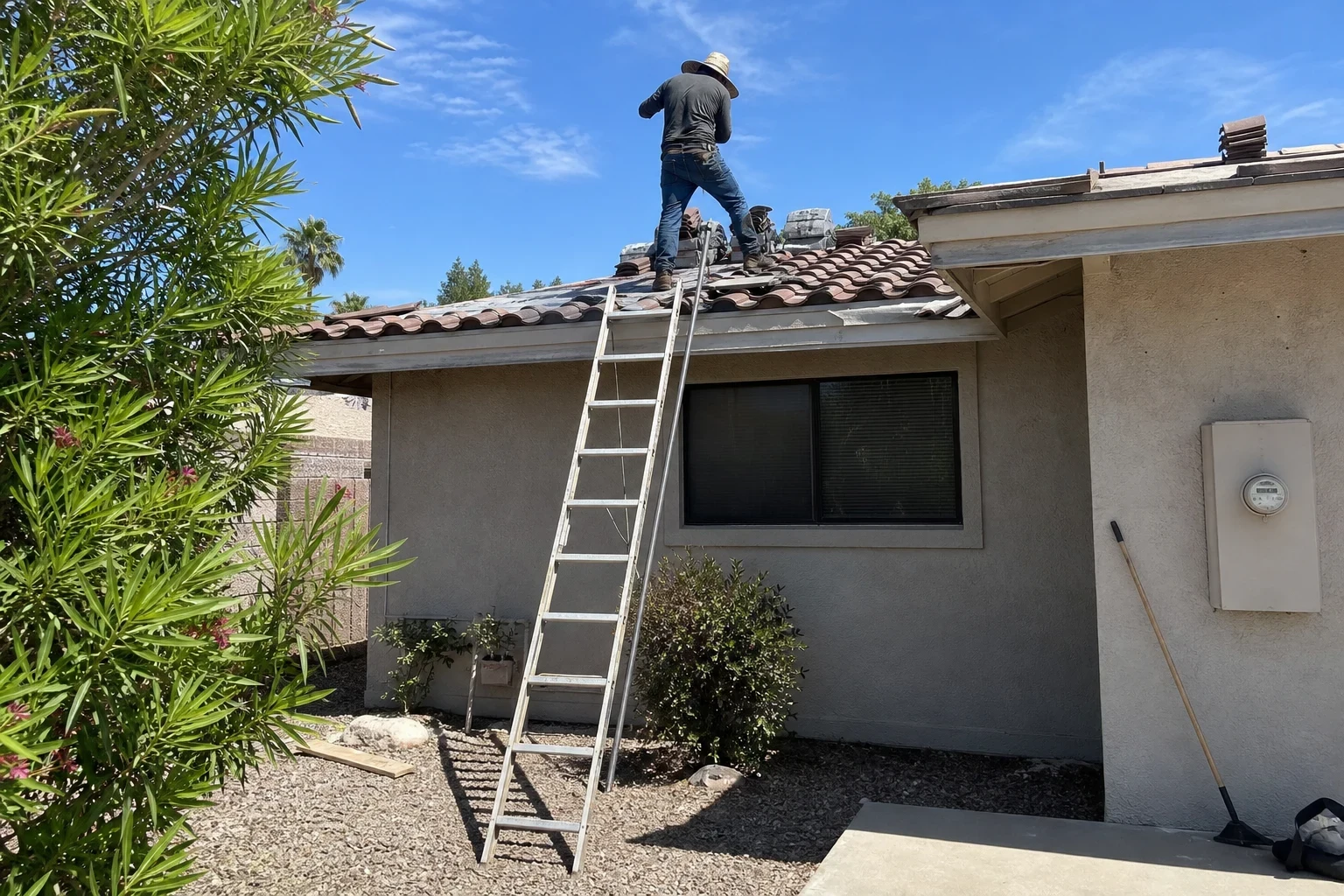
We walk the roof wherever it's safe, placing our feet with care on tile so it doesn't crack. We photograph each area, good or bad, and lift some tiles or check seams where it's called for.
- 3
Inside the attic
When there's an attic hatch, we head up with a light to check the decking, stains, insulation and vents. A drop cloth goes down under the hatch, and we close it all up afterward.
- 4
Going over it with you
Before we go, we sit with you and review the photos. You receive a written summary grouping the findings into fix now, keep an eye on and fine as is.
What Shapes the Cost
We will tell you before we come out whether there is any charge for the inspection and what it covers. Most of what affects cost shows up afterward, in whatever work the inspection points to. These are the things that move that number.
- Roof type and pitch
- Steep tile roofs take longer to walk and inspect than a low-slope shingle roof. Flat roofs with several levels or parapets also add time.
- How many layers are underneath
- A second or third layer of roofing hides the decking and changes what any repair or replacement involves. Finding this early keeps surprises out of your estimate.
- Condition of past repairs
- Sound old patches can stay. Patches that are failing often have to be cut out and redone properly, which adds labor.
- Access and attic space
- Tight attics, no hatch or a roof crowded with coolers and solar panels make the work slower and can affect follow-up repair costs.
Questions About Roof Inspections
Something not covered here? (520) 376-0715
How much time does an inspection take?
For most single-family homes it's roughly one to two hours, counting the attic and the review with you at the end. Bigger or more complex roofs take more time. We don't hurry to get to another job.
Should I be home for it?
It's very helpful. We need to get inside to reach the attic, and reviewing the photos together is the most valuable part. If you can't be there, we can send the photos and go over them by phone.
Are you going to say I need a new roof no matter what?
No. Lots of older roofs have years left with a few focused repairs. If replacement really is the answer, we show you why in photos, and our roof replacement page explains what it involves. If a repair is enough, we'll say that.
Will walking on my tile roof break it?
We step with care on the lower edge of each tile, where it has support. Older tile can be brittle, so once in a while a piece cracks. If one does, we let you know and replace it.
What if the inspection turns up a problem?
We give you a clear written estimate for the fix, kept separate from the inspection. You don't have to book anything that day. Smaller items can usually go through our roof repair service.
How frequently should an older roof get inspected?
Yearly is a smart routine for roofs past middle age, best done before monsoon season starts in early summer. A fast check after any major storm is also a good idea.
See What Your Roof Has Kept Quiet About
We work in Florence, Coolidge, Queen Creek, Casa Grande and the towns nearby. Share a few details about your home and we'll find a visit time that fits your household.